Constitutional law

Will NJAC live or die by the sword of the judges it seeks to regulate? All you want to know of NJAC but were afraid to ask [via Mint]

The justices will have to choose one of many bad options
Debate around the National Judicial Appointments Commission (NJAC) has often been emotive rather than dispassionate, with the discourse ranging from senior lawyer Ram Jethmalani calling it an “evil absurdity” to attorney general Mukul Rohatgi pointing to judges who habitually turned up late in court as a reason to ditch the existing collegium system to select judges.

Privacy not a fundamental right, argues Mukul Rohatgi for Govt as Govt affidavit says otherwise

The right to privacy is not a fundamental right, argued attorney general of India Mukul Rohatgi while defending the constitutional validity of the Aadhar Card, even though his client had allegedly admitted otherwise, reported the Indian Express . Rohatgi has asked for a nine-judge bench to examine w...

Opinion: The Lt Governor v Chief Min conflict is hurting Delhi’s chances of statehood despite the law (by Pavan Bhushan)

Connaught Place
Connaught Place
Pavan Bhushan examines the law relating to what powers the law provides for Lieutenant Governor of Delhi and argues that the bid for Delhi’s statehood has been compromised by the recent fracas.

Are the government’s amazing fast-track commercial courts a cure for our legal system’s ills? Legally Explained by Nick Robinson

i0bk01fy
i0bk01fy
Legal scholar Nick Robinson explores how (and if) the proposed new commercial fast-track courts might work.

Some of the troubling legal issues around the gang rape documentary India’s Daughter (by @nsaikia)

*

Legal issues with the story of [redacted]?
*Lawyer Nandita Saikia argues that the controversial BBC documentary on the Delhi gang rape, India’s Daughter, is flawed though no more than our society itself.

Maneka Gandhi & assemblies: It might be legal to restrict Prashant Bhushan's right to travel, but is it constitutional?
Saurav Datta discusses the authorities’ weak case for refusing Prashant Bhushan a full 10-year passport renewal.

How to be vulgar and get away with it: The prurient limits of obscenity laws (or what could save AIB)

Oh my
Oh my
The Bombay high court earlier this week restrained the police from arresting AIB members, because their comedy was vulgar but not obscene. What’s the difference? Gautam Bhatia explains…

[Opinion] HC rewrites Constitution after Governor defies President’s authority in K’taka PSC ousting
Advocate KV Dhananjay argues that a recent decision of the Karnataka high court in one of his cases amounts to a rewriting of the Constitution of India, which is without parallel or precedent in the constitutional history of India.

Maha ignores SC order; to re-ban dance bars

The Maharashtra government is dropping a provision in the Bombay Police Act 1951 that allowed dance performances in “exempted” establishments like three-star and five-star hotels but banned it elsewhere, and proposing to have a blanket ban on dance bars in the state, reversing the Supreme Court’s Ju...

Why approaching the SC afresh on 377 is the only way: Chetan Gupta looks beyond Koushal

Chetan Gupta
Chetan Gupta
The upcoming curative petition against the reversal of Naz has equally, if not more, dismal prospects of bringing a desired result as the review of that judgment which was dismissed unsurprisingly, argues Delhi advocate Chetan Gupta.

What is wrong with the leaked ‘mincemeat’ Disabilities Bill 2013? Annotated & explained, section by section, by Nalsar
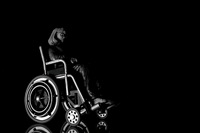
Disability rights: Being minced
Members of Nalsar Hyderabad’s Centre for Disability Studies have marked up the leaked draft of the Cabinet’s watered-down Disability Rights Bill 2013, explaining in detail some of the sections that they feel makes “mincemeat” of the rights of disabled persons.

Nalsar slams leaked Disability Rights Bill 2013 that makes ‘mincemeat’ of rights & may pass for political points

*
Faizan Mustafa
Faizan Mustafa
*Nalsar Hyderabad has called on politicians to scrap the cabinet draft of the Disability Rights Bill that was leaked to activists in late January 2014, and which undoes much of the positive proposals put forward in the original committee’s codification of the United Nations Convention on the Rights of Persons with Disabilities that India ratified in 2007.

Counter-counterpoint: Why a prez reference of the 377 judgment is still the best option and is neither dangerous nor forum shopping

l0umjcrs
l0umjcrs
Countering Alok Prasanna Kumar’s counter-argument earlier this week, Sudhir Krishnaswamy and Shishir Bail counter that a presidential reference remains the best course of action to remedy the Supreme Court’s reversal of the Delhi high court’s judgement that struck down section 377.

Section 377 opinion: The spectre of forum shopping and why a presidential reference would be ‘dangerous’

Advocate Alok Prasanna Kumar argues against a presidential reference as a tool to cure Koushal v Naz, as suggested in a previous column by Sudhir Krishnaswamy and Shishir Bail.

Today the Supreme Court has rejected a review of its own Section 377 judgment. A curative petition too will likely end in failure, given the high rate of rejection for review and curative petitions. But while there is much wrong with the Koushal v Naz judgment, we should not give in to the temptation that Section 377 cannot be struck down by a Constitutional Court and must instead be left to Parliament to repeal. For one, there isn’t even a cogent argument to that effect you will find on reading the Supreme Court of India’s judgment in Koushal.

Section 377, Koushal v Naz: Why reference would be better than review
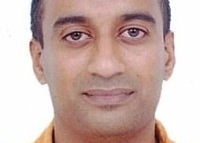
Krishnaswamy
Krishnaswamy
Sudhir Krishnaswamy and Shishir Bail argue that a presidential reference against the Supreme Court’s reversal of the Delhi high court’s judgement in Naz, is strategically superior as it provides the court with the institutional process and scope for enquiry that is necessary to address the critical constitutional questions that have arisen through the Supreme Court’s judgement that overruled the lower court.

How the AK Ganguly #InternJudge case could play out: Prez references and ‘outraging modesty’ dissected
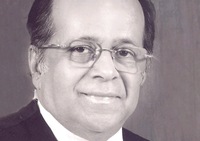
Ganguly
Ganguly
The way will soon be clear for the President to ask for an inquiry into sex harassment allegations against the ex-judge. Question is, how, if at all, would it stick under law?

Opinion: A rare defence of Justice Singhvi in the section 377 'media trial'

Advocate-on-record Amit Gupta puts forward the unfashionable opinion that, although Justice GS Singhvi’s judgment in the section 377 gay sex case was not perfect and unpopular, he did in fact get the law right.

Column inches slamming SC’s Naz ruling overwhelm but 2009 academic argues how #377 is constitutional

The overwhelming majority of column inches spilled since yesterday’s historic about-turn by the Indian judicial system , were highly critical of the effect of the Supreme Court’s decision to uphold the constitutional validity of section 377 criminalising homosexual intercourse. Arguments were vocife...

7 creative (legal) reasons the Supreme Court found not to strike down Section #377

377
377
Legally India has culled seven main reasons from the 98-page judgment, explaining why the Supreme Court decided that a lower court was wrong to repeal the law effectively banning homosexual intercourse.

SC media trial chilling effect: Will trial reporting postponement orders become default litigation strategy?

Livemint: Have a look at shiny new Livemint.com
In today’s edition of Mint: The good news for those who deal in news is that the Supreme Court decided against framing guidelines for covering so-called sub judice matters, or those before the courts.

The bad news is that by delivering what some analysts are calling an ambiguous judgement, the apex court may have well made it easier to muzzle the media and, far worse, institutionalized the process by which individuals and entities fighting cases can ensure that these aren’t covered till the order is passed.