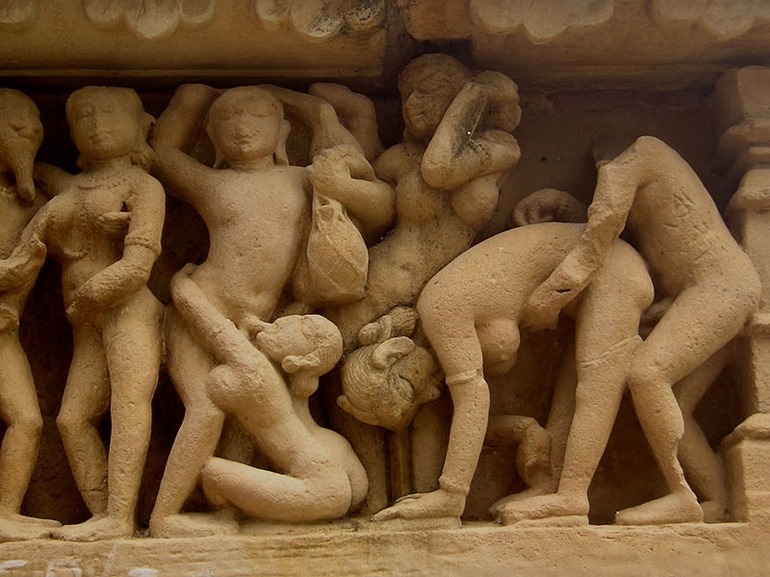
Indian internet service providers (ISPs) received a notice from the Department of Telecommunications (DOT) two days ago (31 July), ordering the blocking of 857 websites, many of which appeared to host pornography, according to an authoritative source at an ISP.
“It’s a list of 857 URLs. Most of the sites [on the list] are pornographic. I would say 100% of the sites,” a senior manager of an ISP, who did not want to be named, told Legally India today. The source declined to share a copy of the blocking order at the time of publication so Legally India could not confirm whether all sites on the list hosted pornographic content.
“All the ISPs have to implement [the block] because we are working as per the restrictions of our licensor. We will work and we have to block, that is all,” explained the source, adding: “You must have started seeing the effects of this blocking.”
Update 1 (3 August, 5am): Mint has reported that three telecom operators have also confirmed the block, which should take full effect from Monday.
Update 2 (3 August 12pm): The Hindustan Times reported that information technology secretary RS Sharma said that the ministry “followed court directives” in the block. Unnamed “sources in the government” told the Times of India that:
denial of access at department of telecom’s (DoT) instance was temporary, insisting that it was a prelude to the creation of a regular regulatory oversight…
the directive was necessitated by the Supreme Court’s observations last month over the home ministry’s failure in blocking child pornography on several sites, and claimed that the idea was not to black out or police what people did in their bedrooms…
the government’s concerns in the wake of the SC’s observations were limited to looking at ways to ensure that there was no public viewing of sites in places such as cyber cafes…
This could be the largest block ever by the DOT, with lawyer and former Centre for Internet and Society (CIS) India member Snehashish Ghosh tweeting that the largest reported block to date was of 309 URLs relating to rioting and communal violence in the North East.
“This is a very big list that we have,” said the ISP source when asked whether the list of 857 sites was the largest ISPs had ever received.
When questioned on why the block was not yet implemented across all ISPs, the manager speculated that since the order was received by ISPs only on Friday, the process could take longer at some companies due to certain technical staff not working on weekends.
While a Delhi internet connection provided by Spectranet and several others only displayed blank pages on 11 out of the world’s 13 most popular pornographic sites yesterday, as first reported by Legally India and users on Reddit, today a Delhi Spectranet connection displayed the following message when a site had been blocked:
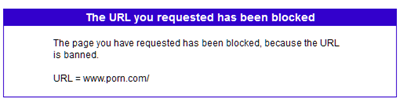
One Reddit user’s browser yesterday displayed the message “Your requested URL has been blocked as per the directions received from Department of Telecommunications, Government of India” when attempting to access a pornographic site:

An Airtel mobile connection tested by Legally India in Delhi had still not implemented the ban at the time of going to press.
According to the ISP source no reasons were specified in the order other than that it was sent under rule 12 of the Information Technology (Procedure and Safeguards for Blocking for Access of Information by Public) Rules, 2009.
In early July the Supreme Court declined to pass an interim order during a petition brought by advcoate Kamlesh Vashwani to block pornographic websites in India. Chief Justice of India (CJI) HL Dattu observed orally in court, during lawyers’ arguments, that it would be a violation of Article 21’s right to personal liberty to ban anyone over 18 years of age from “watching it within the four walls of my room”.
The case is still ongoing.
Photo by Aotearoa

The IT Act section 69A blocking rules explained
The Procedure and Safeguards for Blocking for Access of Information by Public Rules’ Rule 12 allows the government department to take action against ISPs who fail to comply with a blocking direction under the IT Act, which carries a prison term for up to seven years:
12. Action for non-compliance of direction by Intermediary - In case the intermediary fails to comply with the direction issued to him under rule 9, the Designated Officer shall, with the prior approval of the Secretary, Department of Information Technology, initiate appropriate action as may be required to comply with the provisions of sub-section (3) of section 69A of the [IT] Act.
Under section 69A of the IT Act 2000, which the Supreme Court upheld in the Shreya Singhal judgment in March of this year, the government could either order to block websites pursuant to a court order or if it “is satisfied that it is necessary or expedient so to do in the interest of sovereignty and integrity of India, defense of India, security of the State, friendly relations with foreign states or public order or for preventing incitement to the commission of any cognizable offence relating to above”.
Advocate Karuna Nundy, who was one of the lawyers arguing against the IT Act and in particular against section 69A for the People’s Union for Civil Liberties (PUCL), said that the Supreme Court in the Singhal case confirmed that any blocking orders by the government under section 69A should give reasons for why content is blocked, so that it could be challenged in a high court with a writ petition if it exceeds the IT Act blocking powers.
“Prima facie, section 69A of the IT Act doesn’t allow the government to suo motu block pornographic websites,” Nundy commented.
“Section 69A of the IT Act - which is the section that empowers the DOT to block – doesn’t allow the government to block for obscenity without a court order,” she added. “I can’t see how this blocking can be legal.”
To come within the section 69A blocking powers, the most likely avenue the government could argue in favour of the ban appears to be if it could show that the block was necessary or expedient in order to prevent or incite the commission of any cognizable offence relating to public order.
The laws verbatim
In the Singhal judgment Supreme Court justices J Chelameswar and RF Nariman held:
109. It will be noticed that Section 69A unlike Section 66A is a narrowly drawn provision with several safeguards.
First and foremost, blocking can only be resorted to where the Central Government is satisfied that it is necessary so to do.
Secondly, such necessity is relatable only to some of the subjects set out in Article 19(2).
Thirdly, reasons have to be recorded in writing in such blocking order so that they may be assailed in a writ petition under Article 226 of the Constitution. [emphasis added]
The full section 69A of the IT Act states (via CIS India):
69A. Power to issue directions for blocking for public access of any information through any computer resource.-
(1) Where the Central Government or any of its officer specially authorized by it in this behalf is satisfied that it is necessary or expedient so to do in the interest of sovereignty and integrity of India, defense of India, security of the State, friendly relations with foreign states or public order or for preventing incitement to the commission of any cognizable offence relating to above, it may subject to the provisions of sub-sections (2) for reasons to be recorded in writing, by order direct any agency of the Government or intermediary to block access by the public or cause to be blocked for access by public any information generated, transmitted, received, stored or hosted in any computer resource.
(2) The procedure and safeguards subject to which such blocking for access by the public may be carried out shall be such as may be prescribed.
(3) The intermediary who fails to comply with the direction issued under sub-section (1) shall be punished with an imprisonment for a term which may extend to seven years and also be liable to fine.
Comments
In time, these things are bound to come your way, and, unlike the government, we want you to do what is right and in accordance with the fundamental rights provided to us by the CONSTITUTION OF INDIA and not do something out of a need to fulfil personal agendas and to impose upon the general public your idea of how people should enjoy their personal liberty.
Now, ban nude scenes in Indian films, destroy ancient nude statues, pictures and other objects.
Ban having sex with nude people and in visible light, promote reproduction by unnatural methods.
Ban coeducational institutions.
Ban clothes that show the curves of the human body.
Sterelize the population of India.
Give chemicals to Indians that stop the production of sex related hormones in humans.
Create genetically modified Indians with no sex organs.
Then, create Indian Cyborgs.
In a few hundred years we will be able to conquer the world.
When all of this will be implemented, our Indian culture will be secure.
Education is the only answer, people should be more aware, schools should have Sex education and we all need to know and control how to reduce the population by using precaution as this is the root cause of number of problem. night time activity on bed by frustrated people will only lead to increase in population and then problems.
Thanks
Amit
4EVERPROXY OR FREE-PROXY SERVER..
Block these websites too..