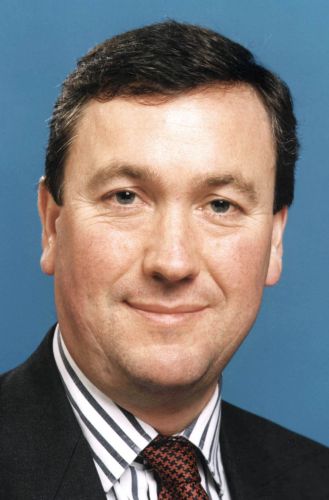
“As far as Ashurst is concerned, I’m very happy with where we are today,” says the firm’s India group head Richard Gubbins. For a lawyer who is just about to shut down an office he has helped build and defend for 15 years, he does not sound upset at all. Is he just putting a brave face on things or is the firm secretly glad to be rid of what had turned into an expensive millstone?
In India, Ashurst has been a somewhat unique animal for a while now, as the only major foreign firm that had a physical footprint in the country.
In three days (22 February) that footprint will be history, as the firm has decided to close the Delhi liaison office, as reported by LegallyIndia.com today.
Limited joy In fairness, its Delhi office was never really allowed to do much, despite the real estate not coming cheap: practice of law was out due to the Bar Council Restrictions on foreign lawyers doing legal work in India, and Ashurst lawyers in India on billing business were strictly forbidden to set foot in the firm’s own premises.
Instead, the office had a different function. Born in 1994 in days when foreign firms barely knew Delhi from Bombay as it then was, Ashurst’s local country manager and former India Administrative Service (IAS) man Ashok Mubayi, helped the firm and its clients understand things better.
After all, then (as well as now to a lesser degree) getting things done in India is as much about understanding the arcane Indian bureaucracy, who you know and who you could get to know, rather than just about the black letter law.
And in 1994, legal advisers who would go out of their way to do this for foreign clients were hard to find and definitely not listed in any Yellow Pages or accessible via Google.
Fast forward 15 years Speaking to Gubbins about work in India, you notice two things: the word ‘relationships’ crops up often, and he is also an eternal optimist with a good sense of humour. The two are bound to serve him well in his new job.
Gubbins took up the position to lead Ashurst’s India business group 18 months ago. It was a new role in the firm, with a job spec to unify and market the firm’s India business across the firm’s other practice areas and geographies.
“I have partners reporting to me in each of the four main ‘platforms’ of our business, which are corporate, infrastructure, energy and banking and finance,” he explains. “I’ve been on visits with my partners responsible for those areas – in the last 18 months, they are fully aware of their responsibilities and what they have to do in getting close to the top Indian law firms and developing relationships with those law firms in their respective practice areas.”
“That has really been developed outside of the confines of the liaison office. Yes, our liaison office has been there and has facilitated the organisation of those visits,” he concedes, “but that’s all it’s done for me in the last 18 months.”
What India could do to benefit him, the firm and its clients now, would be to allow the firm to open a real, fee-earning office in the country, he says but muses: “Knowing India as I do and Ashurst has got to know India very well over the years, you’re not going to achieve utopia overnight.”
Retiring Gubbins claims that the Lawyers Collective judgment, which reiterated that foreign lawyers are not allowed to practise any sort of law including transactional law in India, was not a setback, however.
“I would say actually the judgment is positive in that it is really up to the Government to determine what will happen with the policy going forward,” he notes, adding that he thinks the Government will resolve the matter. “They are aiming to build a consensus among the stakeholders and I think that [Law Minister] Dr Moily is taking it in the right direction and to seek that consensus.”
However, he admits that Moily’s plan to bring excellence to the legal profession as a whole, might take precedence over the politically relatively minor issue of foreign law firms.
“How long is it going to take?” he asks, then laughs. “Maybe long after I retire.”
“I think to be totally realistic and practical, we are where we are and the system is not going to change for a while. I think what that means is that we just carry on doing what we are doing and really getting very close and strengthening our relationships with top legal practitioners in India.”
“We spent the last 16 years doing that. That’s not to say that we’re going to spend the next 16 years doing the same,” he jokes, “but if that’s what it takes that’s what we have to do.”
Future precedent Gubbins sets out one reason for his and other international firms arguably radically long term view of India, when asked whether financially the rewards from India are as great as from say London-based practices. “I’m a huge supporter of India and from my point of view, I consider a partner in a law firm to be a trustee for future generations. In 20 years’ time, China and India are going to be the top two economies in the world. That is the future.”
He recalls that when he headed up Ashurst’s Singapore office in 1996, he had a meeting in Kuala Lumpur with one of the top lawyers in Malaysia.
“He told me that 18 or 19 years previously, he had spoken to partners at Ashurst Morris Crisp & Co, as they were called in 1978, about opening up in Singapore. They took the view that it wasn’t the right moment for them, so I found myself all those years later, a 38-year-old corporate partner, having to do all of the hard work!” Gubbins smiles, but switching to serious mode he adds: “I would like us to build a long-term practice in India and help to satisy the aims and career aspirations of the next generations, given where India is going to be in the future.”
Excellence Gubbins says that he expects the pressure to liberalise to come from clients, and in particular the large Indian corporates: “I spoke to one of our Indian clients the other day, who said, ‘We want you here on the ground, because we want your services and if you were here we would get your services at a cheaper rate.’”
All advisers on Indian transaction are global players, whether bankers or accountants, claims Gubbins, and clients all ask one simple question: “Why can’t our lawyers be here too?”
He notes this is not a problem of quality of local legal advice, which he describes as “excellent”, but of bandwidth. “I think what international law firms have is the depth and resource, and the supporting infrastructure. At the top end [in India] you have quality practitioners – but if a large deal came along, can they put 50 lawyers on a deal?” he asks.
Ashurst’s India practice he explains, has been most successful in the corporate field over the last year. “We’ve probably had more than our fair share of ECM [equity capital markets] transactions and now we are brought into DCM [debt capital markets] transactions too, which I think is very exciting.”
“Our energy and infrastructure platform over the last 18 months has been quieter in that transactions have been largely domestic,” notes Gubbins but says he is positive that it will pick up again. “The international banks, because of the turmoil globally, haven’t been as active as we might otherwise have wished.”
The firm’s practice consists of over 50 lawyers who have been involved on India matters, of whom 20 partners form the core India business group, according to Gubbins. Geographically, much of the centre of gravity at the firm has been shifting to Asia in recent years, although Gubbins himself still sits in London. The firm’s former senior partner Geoffrey Green also relocated to Asia in 2008 to set up the Hong Kong office, and last month Ashurst hired Allen & Overy’s former head of Singapore Keith McGuire, who also focuses on India as part of his practice.
Greying Despite the undoubted dedication and will that is there, in light of the age-old and seemingly endless road to liberalisation you will find that many foreign firm India heads will also have to act as cheerleaders to keep the rest of the partnership enthused about the project.
“I think what it takes is the senior partners with a little bit of grey hair. I’m not quite there yet,” jokes Gubbins, “but you take someone like Stuart Popham, who I think is a visionary, who was there when Coward Chance merged with Clifford Turner [and] is a visionary as far as India is concerned.”
“You need senior partners, you need a bit of grey hair to be prepared to take it forward. In the end it’s all about relationships, and the successful international firms in India will be those prepared to develop those relationships long term.”
If that is the case, then Gubbins’ sensibilities are just the ticket. But buying a one-way flight to India could still be a long way off for him.
Comments
Secondly, the Presence of International Firms , which have better work culture, than lot more Indian Firms , and the Indian Bar which is infested with your 'Face Value' rather than Merits, would do some good to the stand of 'law'.
I entirely agree with your views on the interpretation of 'law' in the Advocates Act - it cannot mean anything other than Indian law - and it's ludicrous to suggest that the Bar Council of India, or any other Indian regulatory authority has any say over the practice of foreign law by foreign lawyers.
As for a 'profession' and advertising, well - hospitals can advertise their medical services - and you can't get more of a 'noble profession' than medicine.