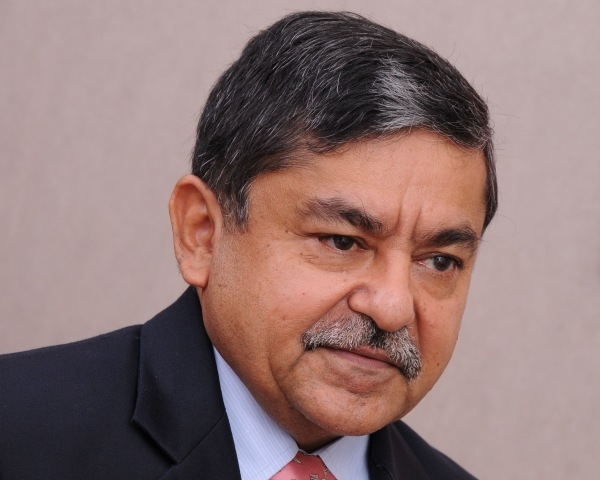
Exclusive: “I’m not nervous about it,” claims Jyoti Sagar about surrendering the last 7-odd per cent of equity he holds in the firm that he started more than 20 years ago. “It is something I have known for 10 years, not something sudden.”
“Our model is well–known but people have carried the impression that it’s just a model but not for real. But people are trying to figure out what’s going on [now that I’m actually retiring].”
This is not surprising: his move from founder to non-equity partner while the firm is continuing may very well be unprecedented in the Indian legal market. It is telling that the closest analogue may be Bijesh Thakker, who closed down his firm Thakker & Thakker in 2010 to focus on philanthropic pursuits while the firm’s partners and associates were left without a brand behind them and had to find other opportunities.
“Founders sometimes carry this impression that they are the ultimate and irreplaceable and they’re indestructible,” says Sagar. “It’s a question of how you view things and how you cross some Rubicons.”
The art of motorcycle maintenance
Sagar, who in 1991 set up Jyoti Sagar Associates as it was then known, seems decidedly Zen about his planned retirement from the firm by 1 April, in just over two weeks, at age 60.
“I think there is anticipation and I am also waiting with bated breath to see how things will happen.” Then he adds: “I’m not fading away from the world. But I’ll have a slightly different role with the firm.”
While he will continue at J Sagar Associates (JSA) in a wide “mentoring role” and as chairman, several other projects are likely to take up an equal amount of time.
“I have a feeling I’m probably going to be busier,” he muses.
Jyoti Sagar Associates sans Jyoti Sagar
Sagar, for one, seems to feel that he is leaving JSA in a shape where it can continue without him at the helm. Berjis Desai, who started the firm’s Mumbai office in 2003 having joined from Udwadia Udeshi & Berjis, will take over Sagar’s erstwhile role as managing partner of the firm and as chair of the executive committee of five partners. (Sagar notes that “Berjis has got another many years” before he is due to retire.)
New executive committee members, who have been already elected by the partnership, will take charge from 1 April.
“I’m confident that these guys are there,” he says about the partnership. “They are cohesive. And don’t forget that two thirds of our current partnership consists of people who were associates at the firm at some point in time and have come up the ladder.”
Something to do
“This is what I wanted to do: set up an institution and see how differently things could be done. People consider it bold [but] it’s something I just set up,” he says simply.
In many ways the firm strives hard – some would argue almost too hard - for a professionalism that is closer to the Western-style law firm model than most others in the market, if not all. In order to prevent nepotism and family structures from emerging, if lawyers at the firm get married, for example, one must resign. The retirement age for all partners (except Sagar) is fixed at 65.
And for a while now, a number of committees have managed various functions at the firm ranging from human resources (HR), training and development, business development, practice and sector verticals and more.
A remuneration committee of four partners proposes partnership equity stakes according to a complex scoring system, taking into account revenue generation as well as contribution to the firm in other less directly financial ways; it is a model that has been continually fine tuned since Sagar opened up his 100 per cent founder’s stake in the firm in 1998.
“Some years ago we did use Robert Kaplan’s Balance Score Card (we named it Propel) which was completely performance driven and results could be different each year,” explains Sagar. “Our distribution structure has evolved over the years and as a partnership we have had the ability to deal with this openly and transparently.”
Money talks?
Now partners are divided broadly into four different bands every three years, in something that can loosely be called a heavily modified lockstep, so that remuneration is completely predictable within that time span. Around 10 partners are in the top band, including Desai and Sagar, and all are within a percentage point of each other.
Sagar himself is on less than 7 per cent, he says, and that share will get distributed between the rest of the partnership when he leaves.
However, he is quick to interject and downplay the importance of finances, and says no partners have ever left because of compensation.
“Money is not the only driver for our partners; this is a world view of most of the senior partners,” he claims, the volume of his voice rising slightly. “For us it is like an enlightened collective. How we build and work as teams – one firm, one nation, one balance sheet – [without] any locational [differences].
“If the cake is big, we get a big piece, if it is smaller, we get a smaller piece.”
Full up
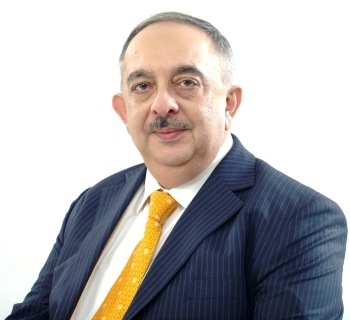
That notwithstanding, for some time now the JSA equity partnership is full-up at 20 partners – the statutory limit for single partnerships under the Indian partnership laws. Some other large Indian firms are run as several partnerships that are connected by so-called valve partners or other structures to share the wealth between offices and partners, but JSA has always eschewed that model.
Last year, Desai called such parallel partnerships as not a “not a very happy solution”, after the firm inducted its third equivalent-to-equity partner outside of the 20 actual equity partners.
The only real solution, according to Sagar, would be full acceptance of the limited liability partnership (LLP) structure for law firms – a reform process that has slowed to a standstill.
“The Bar Council [of India] has not yet taken a view whether LLP firms can practice law,” he notes, but adds: “It looks like it is not a high priority issue for them as of now.”
“LLP is an attractive format. However some firms have concerns on disclosures that would be made in public filings by a LLP. We do not have that concern,” he notes about making public the firm’s revenue and profit figures, although he declined to state the figure to Legally India in this interview.
Life post-JS-Associates
As mentor at JSA, which includes being available to partners as a “sounding board” whenever they wish, Sagar says that he will focus in particular on training and development programmes, as well as improving the knowledge management systems within the firm. “As you’re aware, Indian firms haven’t really got down to doing much about structured training.”
His enthusiasm appears genuine. “It is a very big area of work I’ve always been looking forward to. Hopefully I’ll be working a lot more with the young people in the firm.”
Sagar will also continue as equity partner at the intellectual property (IP) boutique firm K&S Partners, which he co-founded.
Other than that, he will get even more deeply involved with three non-governmental organisations (NGOs) that have been close to his heart for a long time.
The Genesis Foundation, which was founded by his wife, provides “critical medical assistance to orphan children- and children from the underprivileged section of the society – less than 5,000 Rupees a month income”, explains Sagar. While not a “huge scalable model”, he says, It assists around 80 children per year in treating serious heart disorders, cancer, thalassemia major, acute deformities and organ failure.
He will also continue on the board of a charity providing education for slum children – Deepalaya – which he has been involved with for more than 22 years, as well as with Surge – the Society for Urban Regeneration of Gurgaon and its Environs, which tries to improve living and business conditions in the New Delhi satellite city where JSA’s head office is located; Sagar will continue to work from an office there.
Ship not sailed

And, as he launches into retirement, he can be content that he has created something unique.
Challenges remain at the firm, as they do at others. Apart from knowledge management and training, some practice areas could be bolstered, he accedes. Prompted with M&A, where in league tables JSA does not usually feature as highly as rivals AZB & Partners or Amarchand Mangaldas, for example, Sagar responds: “We have to focus on areas that we do well in – if M&A is one of those areas that we think we should be doing better in but it is something that we look across the firm obviously.”
Some measures will include more developed client outreach programmes, says Sagar, which he would personally also focus on as mentor. However, overall, he says, sharing and teamwork across the firm has been going well, and on many transactions even partners in the same department work together and freely share clients.
“As a firm, we don’t have any vested interests here; no one is protecting anything to be handed over to the children,” he says about whether the firm would ever sell out to foreign law firms.
But his statements on the subject could equally encapsulate what he sees as JSA’s credo. “We are more pragmatic and the firm will take a decision, which is in the best interests of our members in the circumstances at the relevant time.”
This also means that much like foreign law firms, JSA likely will not remain immune from the complications and mess of running a democracy of fee-earners and rainmakers without a natural chief by birthright.
Therefore the true test of what Sagar has created will start only now in earnest. But it looks like the chips are down with as good a spread as Jyoti Sagar could have hoped, or planned, for.
- For more about the firm, read JSA’s article on Legallypedia. And anyone can update, so feel free to get involved and improve it.
Comments
doesn't it have a negative connotation? like India has lost 6 wickets for 60 runs; the chips are down.
However, I would keep my fingers crossed for the future of JSA without Jyoti and then without Berjis. I have already been hearing about lack of interaction amongst partners..
On a seperate note and and as response to gaga (Disclaimer: I am not from Amarchand), running a family enterprise has nothing to do with class and dignity. I dont think the partners running AMSS or any other firm which follows the same model are devoid of that just because they have retained higher equity and are tight fisted with any divestment. I' m sure the other partners must be having good incentive enough to be around with the firm (even with the bleak chances of being shared higher equity) considering 'most' (and of course not all) of them would be lapped up by 'most' other firms for a bigger piece of their pie.
What you may criticise them, if you must, if for their policy. Which again, is their prerogative.
Tell me if you have a kid and wont provide for them. Its very natural.
I have no allegiance to AMSS nor am I looking for a job there (else I would have written my full name with contact details), nor am I a partner there trying to make a case for the place. Just that I constantly see criticism and contempt for that firm. They are just doing openly which anyone else would have done had they had lawyer kids.
Again, if one were to look, most 'non-family run firms' are firms which are newly set up (JSA, AZB, Trilegal etc.) and even where the M.Partners have a good number of experience under their belt, they dont have family to pass down the business to (by family I mean lawyer kids) [I may be corrected, but dont think Mr. Luthra, Mr. JS or Zia have lawyer kids. You may disregard my uninformed argument here, if they do. But if it is true, then attributing a virtue for which there is no possibility of deviance is unjust]
More later..
The names you mentioned do have lawyer kids!!
I believe you are correct that one of Zia Mody's daughters is a qualified lawyer, though I would think that AZB's current structure also makes it unlikely that the entire firm can be or will be inherited.
My 2 cents...
And Zia has had partner departures because they were not given equity.
It is certainly the prerogative of founding partners to do as they please, but it doesn't promote sustainable development or create brands that span generations and outlive the founding stars.
I am using the old reader but it seems I am unable to get the feeds of legallyindia.com.
kindly help.
Good night :)
I have moved this thread to the appropriate forum at this link, as it was going off-topic into comment moderation policies again and not related to this article at all. We will be doing that in future for similar discussions as well and respond there.
http://www.legallyindia.com/index.php?option=com_kunena&view=topic&catid=3&id=20&Itemid=622#7573
Anyone can reply to this thread anonymously and without signing in, so I encourage you to do so if you are so inclined or disagree about us having redacted the name of the allegedly "power crazy folks" that spectator really wants published.
Best wishes,
Kian
Akshay Jaitly
It is a norm in the West for big firms to operate as institutions - there is gradual equity dilution and fixed retirement age for partners. Firms survive with the brand intact for 100s of years. In India, this is "not market" and many firms decline because the star partner is unavilable or the "family" rests on its laurels (instead of putting meritorious lawyers in charge of the show, thus forcing them to leave). UNLIKELY that other "owner partners" will follow Mr. Sagar's lead, but if they do, breakways and startups will possibly be less frequent. Presently, good senior lawyers leave their big firms because they are not treated with dignity or feel they will be cheated when it comes to adequate "ownership" in a business they are expected to devote their life to. Thus, while the firms recruit a lot of talent initially, the senior ranks have fewer stars because the star lawyers are not interested in playing second fiddle to "family", who are not necessarily the best lawyers of the firm.
Unless there is a client driven trend, rare examples like Mr. Sagar's are likley to remain that way because the clients think (helplessly) that they lack the power to direct the market such that they get the best service from the best lawyers who are retained by the best firms.