**
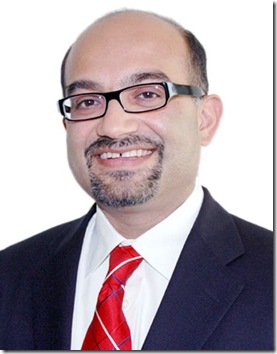
Last month’s promotions take retrospective effect from 1 April and increase Trilegal’s equity partnership to nine, including the five founding partners and two lateral hires Srinivas Parthasarathy and Sitesh Mukherjee who entered on the lockstep in 2008 and 2009.
Parikh graduated from NLSIU Bangalore in 2002 and started his career at DSK Legal. In 2005 he joined Trilegal and was made a partner there in 2008.
Tambe graduated from GLC Mumbai and joined Trilegal from Desai & Diwanji around seven years ago.
Parikh said: “I’d say that there are quantitative as well as qualitative parameters to make it to equity – those parameters are fairly transparent to people in the larger partnership. Given the environment and market conditions I don’t think these are very difficult parameters to meet.”
Criteria such as revenue, administrative responsibilities and client satisfaction were taken into account in the equity partner evaluation. Those parameters were shared with each salaried partner around two years after their initial promotion, said Parikh. “Once those are communicated to you, it becomes a matter of adhering to the parameters [within] a timeframe.”
“Everybody has to come into the bottom of the lockstep and then sort of go through from there,” explained Trilegal co-founding partner Anand Prasad, based in Delhi, and added that there were “concrete plans” to adjust the lockstep in future. (see below)
The first partners to have internally risen onto Trilegal’s lockstep were Abhishek Saxena, Saket Shukla and Sawant Singh, who shortly after their promotion in 2008 broke away to set up Phoenix Legal with Kochhar & Co senior partner Manjula Chawla.
Earlier this month former Trilegal counsel Saurabh Bhasin was promoted as a salaried partner, increasing the ranks of non-equity partners to 10.
Where goes the lockstep?
The Trilegal lockstep is a 13 year lockstep running from 10 to 40 points for each equity partner, explained Prasad, adding that it was “our creation” that had some similarities to its best friend firm Allen & Overy in that it was lean, although the international firm also had to take account of integrating local less profitable offices into the global lockstep.
Each point is equivalent to a fixed amount of money calculated by dividing the firm’s annual profits by the aggregate number of equity points of all partners (i.e. if the net profit of a firm is $1m and all partners together have 100 equity points then each point is worth $10,000).
Founding partners or others at the top of the lockstep – usually called plateau partners – are entitled to a profit share equivalent to 40 equity points at Trilegal.
Junior equity partners, such as Tambe and Parikh, start the lockstep on 10 points – i.e. one fourth of plateau partners.
Every year the points of each equity partner, except for plateau partners, increase by a fixed number of points until they reach the maximum.
In Trilegal’s case every year non-plateau partners receive an additional 2.3 points until they reach 40, with the very last step being around 2.4 points.
If a newly promoted equity partner earned less than a certain revenue threshold on their elevation, that partner’s progression on the lockstep would be subject to a minimum financial performance test – often called a financial gateway - after two years, added Prasad.
Plateau partners’ profit shares remain identical until they retire but their actual take-home pay may increase if the firm’s profits increase faster than the total equity is diluted by new junior partners.
Lockstep partnerships are intended to foster a culture of cooperation between partners where the interests of the firm as a whole and individual partners are usually aligned. Parikh commented: “I think it’s certainly better in comparison than an eat-what-you-kill model. It works wonderfully well in that way and builds an amazing environment within the partnership and we love it.”
However, under lockstep partnerships there is also the risk of losing high-performing and high-billing partners who could receive more compensation under a non-lockstep system, and partners may be less motivated to perform once they are on the lockstep due to the automatic progression.
“There are concrete plans and there is a need to fine tune the financial lockstep further and make it more productive,” said Trilegal’s Prasad. Potentially with the help of external consultants, the firm was considering a shortening of the lockstep, creating a system where points were not evenly distributed throughout the lockstep, or adding evaluations to enter the lockstep to eliminate any discretion. “There are a wide variety of options we have on the table.”
“It has to be continuously evolving model,” agreed Parikh. “The idea should always be to attract talent from elsewhere by marketing the model and making it more and more effective for a larger number of people and to not just make it a club.”
Comments
Completely agree with you, the firm has a very long way to go!
Did not quite understand. Does that mean that Mr. Prasad will get only 4 times of what Nishant will make??? Does not make sense.
Does not work for any other firm either (with or without lock-step). Would you say that the Managing/Founding Partner of AZB or AMSS or Luthra would make only 4 times of his junior-most partner??? That would leave out any incentive for the rainmakers to work !!!
Did not quite understand. Does that mean that Mr. Prasad will get only 4 times of what Nishant will make??? Does not make sense.
Does not work for any other firm either (with or without lock-step). Would you say that the Managing/Founding Partner of AZB or AMSS or Luthra would make only 4 times of his junior-most partner??? That would leave out any incentive for the rainmakers to work !!![/quote]
Also, can anyone give an idea / speculate how much 1 point is currently worth ?
Thanks
ok...the most-junior partner on the lockstep....you wish to believe that a Founding Partner of any Firm, with 20 yrs of experience, creating and building and developing a firm over the last one decade, suddenly would decide that a baccha who joined 6 years back, should not be earning less than 1/4 of what the FP earns? Either this is charity/benevolence, or there are other income streams from the firm.
PS: My comment is not related to any firm, but only to understand how this lockstep model (1:4) can practically be true
The former, more a “British” system if I may refer to it as such, is based on the ideology that partnership needs to be camaraderie and all partners share the profits and this is not dependent on whether or not they bring in the money in that particular year. This largely recognises other areas of a partners work such as development intellectual capital within the firm. This system recognises that you need both the rainmakers to bring in work and partners who are capable of executing those deals. The credit is shared between both the rainmakers who wine, dine and nurture relationships and those partners who execute the deals. This being said each partner is required to meet her or his target.
In the case of the later, which traditionally has been more of a US model, partner remuneration is more dependent on the money the relevant partner brings in. In this situation a rainmaker would make more money than some other partners at her or his level. The downside is that you will not have partners sharing clients and each partner guards their territory (I am not saying that this does exist in a pure lock-step, but it ought not exist) and the fact that if you have a bad year (whether due to personal reasons or otherwise) you take the hit.
Needless to state that neither of the systems is perfect and hence the new forms of modified lock-steps which are emerging in the market.
Of course it does incentivise junior partners. But hang on, in which top firm does the managing/founding partner make only four times of what the junior most partner makes??? Hard to believe this !! Considering that some of the MP/FP are amongst the highest individual tax payers in the country and the junior-most partner is nowhere there !!!
A salaried partner makes around 6-10 lakhs a month, excluding the bonus component and an equity partner makes around 1.5 crores a year.
This is impossible. In any firm, an equity partner takes a share of the profits after tax. If there are 8 founders taking 8 crore each, then the post tax distributable profit (not all profit is distributed) would be a minimum of 64 crore. There is also the issue of the non founder equity partners to add to this amount. No way this is accurate.
"Share their wealth" ?? Lol!
Tells me how little you guys actually know about other firms!
this is unbecoming. Trilegal is not Anand Prasad, I suggest Mumbai office to break-away.
As far as the value of a point is concerned, I would speculate that it is between 15-20 lakhs a point, giving the top partners about 6-8 and the bottom equity partners about 1.5-2. Will be interesting to see how this plays out for Trilegal in the longer term.
As far as the value of a point is concerned, I would speculate that it is between 15-20 lakhs a point, giving the top partners about 6-8 and the bottom equity partners about 1.5-2. Will be interesting to see how this plays out for Trilegal in the longer term.[/quote]
Very accurate figures
"The non-family share is distributed through a seven step lockstep process and top of the equity pile is about $2 million" from: http://business.in.com/article/boardroom/indias-biggest-in-law-amarchand-mangaldas/15382/0
Readers, am I correct?
Secondly, the figures mentioned for bottom equity partners in the discussion above seem to be a lot less than what senior associates would be earning in several of the 'elite' firms.
Other than compensation, what is the main difference between salaried and equity?
And, what about that creature, partner designate. Can you be a PD and kept in limbo indefinitely?
Thanks to all who answer the above.