These days there are probably few if any lawyers who, locked up at home for weeks and often 24 hours a day, has not pondered about their mental health.
It is something we should be pondering a lot more often and speaking out about, according to Herbert Smith Freehills (HSF) India head Chris Parsons.
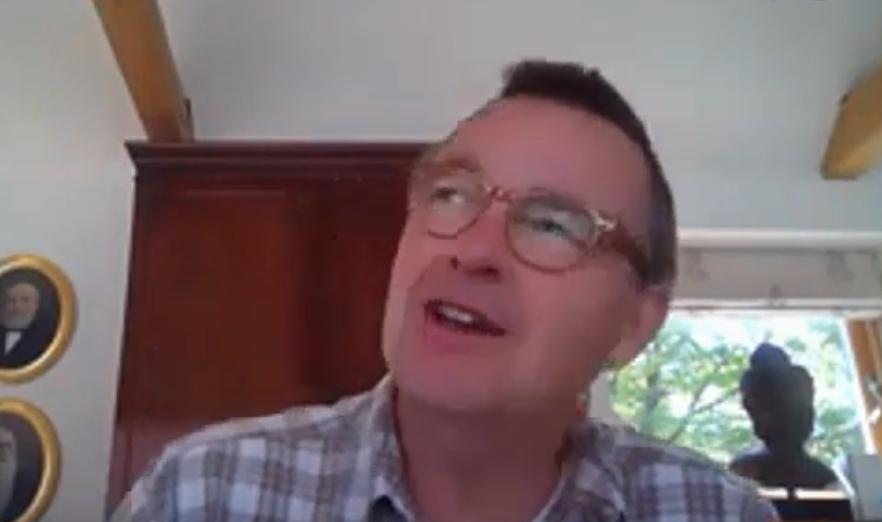
Parsons recently talked about his own and the legal profession’s wider challenges in dealing with alcoholism, anxiety and depression in a video interview with Delhi-based senior advocate (and former DSK Legal senior partner) Balbir Singh.
“On the face of it, you know, you’d have assumed that I was the sort of the archetypical success story,” Parsons recounted to Singh. “On the face of it I had a good job, I just been promoted to equity partner, you know the ultimate goal if you like, within a firm like Herbert Smith [as it then was], I had a nice home, I had three lovely boys.”
And even his father was at least a little bit proud of him.
But in reality, inside feelings of anxiety and depression he could not control were taking their toll on him, he told Singh. Parsons said he had started working even harder and self-medicating with alcohol to the point of alcoholism, creating a somewhat vicious cycle.
Parsons said: “That’s the sadness with with depression: is that you can’t see into somebody’s mind, you can’t see into their pain, whilst everything may look fine, it often isn’t and the danger is, I think, in the whole mental well-being space, is that it’s very easy to be able to point at somebody else and saying, ‘but look they’re all right’, ‘they’re coping like me’.
“And of course it looked like I was coping, it looked like I was fine, it looked like […] I had all of the attributes of somebody who should be fine.”
Back then, around 1995 in the UK, said Parsons, things with respect to mental health were “probably a little bit like India today”. “Nobody talked about this stuff,” he said, “people were embarrassed to engage on this topic, I was embarrassed to engage on this topic.”
The narrative that he had built up for himself and that others had in part willingly helped him build, was that “Chris had been working too hard and needed recharge his batteries”. “And that was a narrative that I was happy to support because it it was a narrative consistent with a successful partner who just been working too hard, [instead of actually saying] there were much deeper troubles,” he said.
But Parsons has changed this narrative and for several years now has become an active ambassador for mental health, particularly in the UK legal profession as well as at HSF.
“Part of my story is a story of hope, that there is life after depression,” Parsons said, noting that the majority of people recover from mental ill-health.
He was doing much better now with his alcohol addiction under control and his depression and anxiety more manageable, though both required constant vigilance and self-awareness. For Parsons, he said, “aspects of lawyering were a trigger”, but it took him many years to realise that about himself. “Leaders need to change their attitude,” said Parsons about the best way of improving mental health care in the legal profession, and that “leaders have a responsibility to acknowledge” the issues.
And at HSF, for instance, change had been more rapid than expected after Parsons was amongst those spearheading more dialogue. “Not only have partners spoken out about mental health issues, but also secretaries, associates, trainees [have shared their stories] with 6,000 employees at HSF globally.
“And they were willing to do it because a) they felt the culture was accepting of it, and I think most brave of all, to believe that it would not affect their careers.”
It was “extraordinary how quickly things can change”, with much of the improvements having only happened in very recent years, said Parsons about the UK legal industry and the wider business landscape. “It ought to wake-up call to owners of businesses and law firms in particular,” Parsons noted. “Because […] what we’re talking about here is that actually if they can build an environment where people feel safer better and that their mental health issues are taken account of, they could also build much more resilient and actually much more ultimately profitable organisations.”
In a way, that’s a no-brainer: a workforce that is suffering from fewer mental health issues and is supported by the organisation they work at, is likely to be more productive and more engaged with the firm culture.
Singh noted in the interview that as far as mental health issues go, “there is no backup” in India for most lawyers.
Parsons agreed, though he added: “There has definitely been some movement in a Indian law firm community around trying to address mental horizon.” He said that he’d had positive discussion with Indian law firms about the issues though he is not sure what progress has been tangibly made in practice.
Parsons was the first video interview of Singh’s, who has recently started a website called Live View Point, as a bit of a lockdown hobby project, where he intends to carry video interviews that would hopefully be interesting to the legal profession and others under lockdown, with an “objective of creating collective wisdom and thought process to enable professionals to deal with concerns and show some light in future”.
Watch the edited 30-minute conversation between Singh and Parsons below.
{youtube}https://www.youtube.com/watch?v=0PVqsL8umMw{/youtube}
Comments
support. this includes social emotional and home staff than in india. typically.
it is good UK is acknowledging the D. but not true that it is all accepted in UK and in india it is a stigma.
he can afford to say this as he is near close to his career close and very successful with almost grown up kids.
Then one day I mustered some long lost courage and decided to end my marriage (this was not the first thought, I wanted to address the situation though it ended up in a divorce). I spoke to my wife over a period of months, and we mutually decided to part ways.
Post my divorce, this girl joined my team. She was very pretty, very sweet, headstrong, balanced, everything you could ask for. As you would have guessed by now, both of us fell for each other. I don’t want to go into the details, but it happened over a course of an entire year. It was love, not just some office romance. She was willing to marry me, and I her. All this was now looking like a real possibility - finally a good and happy life. Her only conditions were that I quit smoking and get out of a personal (and very troublesome and toll taking) situation that I cant describe here. Let’s call it - the Situation. I pretty much gave up smoking over a period of 5-6 months. But we were now having troubles, we were fighting every other day over the Situation. I was unable to get out of the Situation, because of the COVID lockdown (still stuck in it). Every time we broke up (which was happening a lot), I had this strong urge to smoke. Twice I gave in to smoking. I also got to see a new side of hers – crazy angry side – ‘slapped me twice when she saw me smoke’ (no joke, these were real tight slaps - but, as I am good at it, I am brushing it under the carpet). The thing was, she was also going through the same depression that I was, and she was also losing it. She never had these crazy act outs before, but now she was having one every other day. The relationship was getting more and more poisonous everyday. Both of us now wanted out, but both of us are heavily invested in each other – and really really love each other. She faced her side of the problems, convincing her family to marry a divorcee, letting go of several ‘better’ arrange marriage proposals, and several other things. I don’t even know what is holding us together now.
Thanks to all this, I am sinking into something. I don’t even know whether its depression. I am not looking to be judged. I have not even done justice to my story – summarising years in less than 1000 words. I have not done justice to her, in telling her side of the story. I just wanted to say something out loud.
I was a top rated associate- smart and etc (all that gets you fat bonus and expedited career jumps). Told my partner- who said she supports and its a safe space. Maybe her intent was right. But she went ahead and discussed it with her firm confidantes/bff/partners on the same side, who are gossip mongers. Word spread - most people believed that I am “crazy” and “losing it”. They’d speak stuff behind my back - which I discovered later. As the firm politics would have it- the haters knew and apparently everyone knew. Used this, put me in impossible situations, questioned my credibility to even work as an intern (incorrectly- which I again discovered later when a former colleague met me) and branded me as incompetent crazy person- when I didn’t even work with them. Super vicious life there pulled me deeper into depression, until I quit for good. Most of my friends already had- citing mental health reasons. Glad that they did quit before it became a monster for them- like it did for me.
Glad I did.
Point is that even if you understand- you really don’t even if you act as a fiduciary and fuck the other person over by telling everyone else who may not. In law firms, these things really affect a person’s career trajectory and ofcourse, survival.
The conversation is about inability to address mental health in Indian law firms. This is a fact and just like Indian society, the standards expected at Indian law firms make it impossible for someone to even acknowledge that this problem exists. Senior partners lack emotional intelligence to not classify this as a performance problem, which is why junior lawyers are incapable of articulating for help when they need it. One can argue that addressing someone’s mental health is not the responsibility of an organization, but I’m afraid this sector and its participants actively contribute to such conditions so they can’t not be involved in the resolution.
[youtube]https://www.youtube.com/watch?v=2rDD1YqfvLo[/youtube]