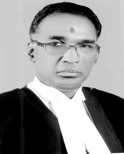
Justice J Chelameswar, who joined the Supreme Court on 10 October 2011, has so far given four dissenting judgments, including the NJAC verdict delivered on 16 October.
In DMDK vs Election Commission of India, he dissented from the majority and held that the Symbols Order is violative of Article 14 of the Constitution.
In Mohd. Arif vs Registrar, Supreme Court of India, he dissented from the majority, by holding that there is no need to grant oral hearing while hearing review petitions of death row convicts.
In PA Sangma vs Pranab Mukherjee he dissented from the majority Judges and held thatSangma’s election petition against Pranab Mukherjee, after the last Presidential election, deserves a regular hearing in the Supreme Court.
In the latest verdict on holding NJAC Act and the 99th Constitution Amendment Act unconstitutional, he again dissented from the majority and held the 99th Constitution Amendment Act constitutional because he concluded that judiciary is not the only institution which can safeguard independence of judiciary, and that the Act cannot be held unconstitutional merely on the suspicions that the Executive’s involvement in the appointment process will compromise independence of judiciary.
He did not go into the constitutionality of the NJAC Act, because he did not find the need for it in view of the majority judgment.
Comments
A Judge Adapts to Changing Benches: https://rudrajyotinathray.wordpress.com/2014/12/22/contents-of-election-petitions/