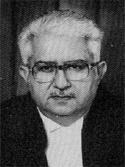
As Justice Khehar-led Constitution Bench reassembles today (3 November) to hear proposals for reforming the revived collegium to select judges of the higher judiciary, it cannot help listening to the echoes of its momentous decision to strike down the 99th Amendment Act and the NJAC Act in their entirety, even two weeks after it was delivered on 16 October.
The Supreme Court Advocates-on-Record Association (SCAORA) has suggested a consultative mechanism comprising judges outside the collegium and representatives of various lawyers bodies for selection of candidates for appointment as apex court and high court judges. The SCAORA in its suggestion for a ...
Advocate Mathews J Nedumpara has filed a review petition against the Supreme Court’s decision to strike down the National Judicial Appointments Commission (NJAC) Act and the 99th constitutional amendment reported the Times of India . Nedumpara asserts in his petition that the law creating the NJAC d...
Justice Kurian Joseph’s historical counterfactual: If only the bench that heard the First Judges case in 1981 had not ignored Samsher Singh, there would not have been Second Judges, Third Judges, and Fourth Judges cases later.
The future independence or otherwise of the judiciary will be decided today in the fourth judges case, ruling on the validity or otherwise of the National Judicial Appointments Commission (NJAC).
The Supreme Court will pronounce on Friday the much-awaited verdict on a batch of petitions challenging the constitutional validity of the National Judicial Appointment Commission (NJAC) that seeks to replace 22-year-old collegium system for appointment of judges to the higher judiciary. Verdict on ...
The justices will have to choose one of many bad optionsDebate around the National Judicial Appointments Commission (NJAC) has often been emotive rather than dispassionate, with the discourse ranging from senior lawyer Ram Jethmalani calling it an “evil absurdity” to attorney general Mukul Rohatgi pointing to judges who habitually turned up late in court as a reason to ditch the existing collegium system to select judges.
The Supreme Court on Wednesday reserved its judgment on a batch of petitions challenging the constitutional validity of National Judicial Appointment Commission (NJAC) and extended its interim order protecting services of the additional judges till the verdict is pronounced A constitution bench of J...
The Supreme Court on Thursday asked for the central government’s response to contentions that certain provisions of NJAC Act of 2014 dealing with selection of high court judges violated the federal structure and were substantive than procedural in nature. Asking Solicitor General Ranjit Kumar to add...
The Supreme Court today expressed its misgiving on opening the entire process of appointments to the higher judiciary to public scrutiny, saying that words like “transparency” and “criteria” sound good but have their pitfalls. Noting that transparency could be there to a “certain degree”, the court ...
The Supreme Court was on Tuesday told that the entire country was suffering on account of bad politics by bad politicians, who should thus have no voice in the higher judicial appointments. “We are suffering from bad politics and we are suffering from bad politicians. Whole political class is under ...
Madhya Pradesh district and sessions judge Jagdish Baheti has filed a petition before the Supreme Court over the Madhya Pradesh high court collegium’s decision to elevate his juniors but not him, due to a chargesheet against him alleging that he had granted defendants anticipatory bail on the basis ...
“Justice [Gyan Sudha] Misra, who although sat a little after the scheduled time, never compromised by rising just after half-an-hour. She was the last one to leave the court premises, be it the Supreme Court or High Court. There were absolutely no cause-lists that were not exhausted by her and no ju...
The collegium, the Bar Council of India (BCI) and the Common Law Admission Test (CLAT) symbolise the cliques that are not accountable to anyone other than themselves that run the Indian legal universe, argues NLSIU Bangalore visiting professor Shamnad Basheer on recent news start-up website The Wire...
The collegium, the Bar Council of India (BCI) and the Common Law Admission Test (CLAT) symbolise the cliques that are not accountable to anyone other than themselves that run the Indian legal universe, argues NLSIU Bangalore visiting professor Shamnad Basheer on recent news start-up website The Wire...
Disputing the government position, an association of apex court lawyers on Friday told the Supreme Court that parliament could not have passed the National Judicial Appointment Commission Act in August 2014 as it had no foundation in the constitution to stand on. “The passage of NJAC Act, 2014, was ...
The Supreme Court Advocate on Record Association (SCAORA) on Wednesday questioned in the apex court the central government’s claim that junking the collegium system for National Judicial Appointment Commission was “the will of the nation”. Assailing the government’s contention that the “nation wants...
Taking a divergent position from the government, the Supreme Court Bar Association (SCBA) Tuesday told the Supreme Court that if it was to strike down the NJAC, then it would result in automatic resurrection of the collegium system followed earlier. “I disagree with the government that the invalidat...
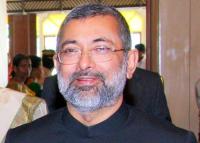 Justice Kurian Joseph’s historical counterfactual: If only the bench that heard the First Judges case in 1981 had not ignored Samsher Singh, there would not have been Second Judges, Third Judges, and Fourth Judges cases later.
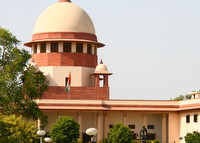 The future independence or otherwise of the judiciary will be decided today in the fourth judges case, ruling on the validity or otherwise of the National Judicial Appointments Commission (NJAC).