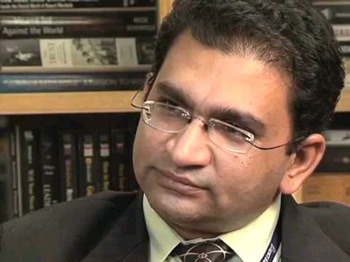
Pramod Rao, the founder partner of IndusLaw’s Mumbai office and former general counsel (GC) of ICICI Bank, will join Citibank India as its GC in July.
He will head up a team of around 18 in India from Mumbai after the former Citi GC, Sandip Beri, resigned to return to private practice last month.
“It’s going to be a challenging time in a multinational and an organisation that is 200 years old and spread out all over the world,” Rao told Legally India about his new role at Citi.
“When I left ICICI Bank as their General Counsel, it was with the stated objective of getting into private practice. Whilst many law firms (it would not be appropriate to name them) approached me, it was I who approached IndusLaw and wanted to be a part of IndusLaw,” he commented in a statement about his joining IndusLaw in April 2012 as an equity partner.
“However, I have also realised that personally the role of partner at a law firm in private practice is not what I am happy with. I am more comfortable in being an in-house counsel, and that is where my path lies. It was difficult for me to come to this realisation. The reluctant acceptance of this decision, and thereafter support by my partners at IndusLaw when I communicated this to them was personally heartening. Given the depth and quality that I experienced at close quarters, I hope to be able to work with IndusLaw in the future.”
“I guess I either didn’t fully estimate all the stresses and struggles or whatever that one would say exist in private practice,” Rao told Legally India, noting that there were elements of being in private practice where he felt he could not do “justice to the vision”, having grown up professionally in an in-house environment rather than a law firm.
“I think, having understood as to how a law firm works and so on, there will be far more empathy if nothing else, having worked on both sides now.”
The main difference between the roles, he said, was that in-house counsel were generally sitting between the commercial and the legal on a deal, whereas law firms were mostly acting in a purely advisory capacity; “nothing understates the relevance of either”.
IndusLaw partner Kartik Ganapathy commented in a statement: “It was wonderful when Pramod reached out and said he wanted to be a part of IndusLaw. We did realise that Pramod remained an in-house person at heart, but would try to make the transition. It has been great working with him, and we hope that this will continue. It is unfortunate that Pramod took this step, but we wish Pramod all the best in his future endeavours.”
The six-lawyer-strong Mumbai office of IndusLaw will be headed by partner Priyanka Roy, who joined from erstwhile start-up Alliance Legal. IndusLaw was founded in 2000.
Comments
Is it a challenging role for him just because Citi is 200 years old and spread across the world ??!! :)
In any event, he will head legal of Citibank India..
Wow!
did not know that! nice to know.
do you have a place where I can get these gems of wisdom from you.
(in case, you did not figure it out, I am being sarcastic)
it is almost unheard that a GC (or a junior Counsel) would not have worked in private practice. without having worked in private practice a GC cannot optimally perform his/her role, no matter how brilliant that person is.
Wish him all the best!
Kudos to him for being so honest. To the commentators above, a GC's role is as challenging if not more than a law firm partner. It is just different. Don't expose your brain with such comments.
But Where is Sandip Beri going?
Good to know that he has empathy for law firm partners now and realises how much hard work and stress goes with a partner's job. The Rolex, BMWs and Audis of the partners don't pay for themselves.
How does that matter to you?
I guess it would be around 1.5 to 2 crores a year (including bonus), plus nice benefits and perks.
Indus Law is mid size in Bangalore and nothing beyond Bangalore!
There are very few general counsel in India at Indian companies who have real legal chops. Sandip had the training and experience, practiced with a major international law firm, and may well prosper in private practice. The rest of the inhouse crowd here have corporate survival skills and little else. There are of course notable examples to the contrary.
Counsel for promoter-driven Indian companies have little opportunity to operate as general counsel in the American style, and who would have taught Rao how to operate at an international level? Citibank can teach Rao how to be a better lawyer - the training and exposure available there will be better than anything available in an Indian company, and better than any Indian law firm. Until now he's probably been little more than an administrator who knew how to manage up. It would be unfair to expect more of him given his background. Hope he doesn't bring domestic compliance levels to the FATCA and FCPA big leagues at Citi.
he is joining a competitor from a non competing industry, that is private practice.
a non compete clause is only for a certain period and that too it must be compensated. now, sometimes this non compete period also clashes with the "notice period." given during termination/ resignation.
Are you getting this concept ?
A non compete clause, would have come into action, if he was joining a law firm and consequently, there were doubts about what all from the present firm he could/would take to the new firm. In the present case, that would have been a still born hypothetical situation as Rao was the founder.
In any case, remember that non-compete clause has to be beautifully worded so as to not fall foul of section 27 of the Indian contract act. (restraint of trade)
For those in the know, ICICI is not promoter driven, nyse listed (hence with all possible US laws applicable) and emerged unscathed thru the financial criss - it did have its own domestic issues, but weathered the storms quite well. If 'legal chops' are not proven during such circumstances, then when does one judge them?
That citi will prove a training ground, given its a MNC larger than the scale of ICICI (or even SBi) is without doubt...
you cant actually draw a comparison here.... Bhojani, Vedasagar went to private practice after retirement/self imposed retirement. Krishnava, Sai, Vineeta and Priyanka were hardly there for more than 2-4 years. On the other hand, Pramod was in ICICI for more than 15 years, was GC and neither was he anywhere near retirement. I would be surprised if he is more than 40-42 years old
While i agree that generating cash flows could be very stressful, we must appreciate the fact that an inhouse lawyer rides up the ladder to become the GC of any company sole basis his/her knowledge base coupled with business acumen without compromising on the core of his profession.
People seem to forget that ICICI went through a tremendous period of growth during Pramod's term as GC. They have dealt with some complex JVs in severely regulated sectors and have businesses around the world. I am not sure if any smart kid could have taken ICICI through all of this. It takes a combination of high class legal skills, business acumen and management skills to take one through all this.
Also, comparing "naukri" to "entrepreneurship" is like comparing apples and oranges. Each requires a different set of skills. If not, why is it then that many many successful start ups around the world have professional CEOs in the growth phase? It's no different in law. A professional CEO may not have the skills to be an entrepreneur and a successful entrepreneur may not have the ability to build scale. ICICI runs among the largest legal departments in India. ICICI's GC may not be happy being in private practice just as much as a partner of a law firm not being happy being GC of ICICI. There is no shame in either.
I would ask all those entrepreneurs who run their own targets and plans within a large firm environment to achieve 60% of those numbers in a law firm of their own - de hors the brand, the support and processes that the law firm affords. How many partners of large law firms have been successful when they have gone out on their own? This question is not just for India but around the world.
At the end of the day being a partner in a big law firm is as tough as being GC in a large company. It is equally tough to run your own shop. The only material question is how good you are at what you do. It's equally tough to be at the top of the game.
The smart kid who laughed at Pramod's comment about a 200 year old world wide institution obviously has no clue as to how organizations run. There are practices, customs and ways of dealing with things which come with time and scale. Only one who has been through it will understand.
Pray tell me how being a partner in a big law firm is as tough as being GC in a large company?
And please let me know, in an Indian context. GCs of companies in India are glorified babus, who are file-pushers. They refer all high stake, high risk, important matters to law firms, to cover their backside.
If GCs and in-house legal counsels were so good (to handle deals on their own), then law firms would have been out of business.
Now that surely doesnt mean that you are more knowledgable, it only means that you are inclined to accomodate a bad deal hoping for a litigation and some cash inflows at a later point too. The point I am making is that dont think that you are in business because you are a sharp lawyer, you are in business because the business guys know that you will do exactly what they want you to do while the inhouse will apply mind and evaluate a deal from a business and legal perspective .
And guess what if i go by your logic, the moment you join a company and become an inhouse- you will also start refering all high stake, high risk, important matters to law firms, to cover your backside. Won't you? What does that imply Hopeless ji?
Can't believe we have people like you on this earth!!
Rao's situation also reflects the nature of banking work. Whatever skills he has are most desirable in an in house situation. The kind of daily churn of banking dictates that regular processes are internal and that outside counsel is only required for extraordinary situations.
I have seen exceptional in house counsel for I banks and regular banks flop because their skills are well suited to internal plumbing work and not to the specialized work companies seek externally. If he could have offered services to the applicants seeking a new banking license, advised them on how to set up their internal processes, or other such work, I can see a potentially profitable product line. That is likely being done by the big tax consultancies, however, who are more adept at packaging those services than Indian law firms.
It's not a knock on Rao to suggest, as he does here, that he prefers the safety of a setting where his skills are best appreciated and rewarded. His statements are mature and reality based.
But it is useful to remind others who are unfamiliar with how it works at a high level in house for Indian companies, that the chief legal skills of most of these folks consist of giving good meeting rather than power drafting or negotiating. It is more common to hear of high level in house asking for kickbacks for referring work than praise for their substantive legal skills.
I did not understand that.
Ranbaxy paid a fine of half a billion, promoters had to sell a company.
And Dinesh Thakur has become a poster boy of the success of whistle blower laws. And as a corollary, shows poor whistle blower laws in India.
How do you say Ranbaxy's counsels did an awesome job ? am i missing something here. Or is it that you think just because they paid a fine, and no jail term so its OK ?
if thats the reason, then you need to brush up on US laws and its difference from Indian law. If there is some other reason, please let us lesser mortals know!
Thanks!
So when you are going to give work to someone who you know is not talented, but has infrastructure, then what is wrong in kickbacks ?
even otherwise, what is wrong in kickbacks ?
res ipsa loquitor
Citi is a US bank operating in India - which means a minimum of dual jurisdictional issues to deal with + it would have large cross border business. not to forget chances of growth beyond Indian shores into Asia or elsewhere or even NY where the head office is. So not necessarily out of place for him to say this
Just being plain bitchy
Anyhow, GC of Citibank - India (where he will be reporting to Asian Head Professionally) will not be the same as GC of ICICI Bank where he enjoyed significant freedom as, for more than 6 years, his Professional Judgements and Decisions were not subjected to professional scrutinisation.
Further in Citibank he will be walking into an already existing Legal Department and it remains to be seen how he is going to fit into the Team without generating shock and take it forward. In ICICI Bank there was significant attrition when he was at the helm with many proven performers at senior level leaving the Bank though they never looked for change.
So even back as GC of In-house of a Bank, Pramod has challenges ahead in all fronts, in facing which his ICICI Bank experience may not be adequate.
Actually he was getting more than 1 crores (if you look at ICICI's disclosure statements) so its a big ? why he left. Kian, is there a scoop here.