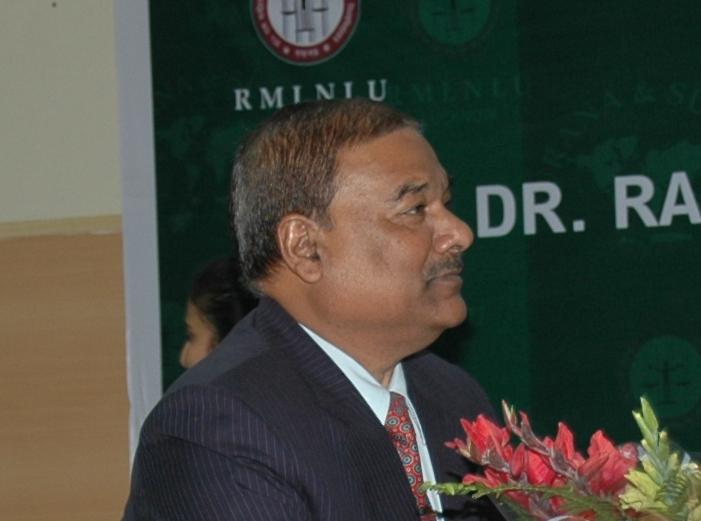
 CLAT convenor and DNLU Jabalpur VC Prof Balraj Chauhan shares some of his and the committee’s current deliberations surrounding potentially taking the admissions test online this year
Editor’s Note: The Common Law Admission Test (CLAT) 2020 is currently (very tentatively) scheduled to be held physically some time in July. What is probably one of the largest private law school competitive law entrance test, though numbers are lower than the CLAT and also NLU Delhi’s AILET, for instance, the LSAT-India, has scheduled 14 June and will for the first time hold the exam entirely online. Whether that experiment will succeed may also have bearing on the future of this year’s CLAT, although for now, the CLAT will remain offline.
Online Entrance Exams: Issues In India
By Prof Balraj Chauhan, Convenor, CLAT-2020
The global pandemic, Covid-19 has brought our lives to stand still. But the issue is that whether we should wait for it to be eliminated from our lives to turn back to normal or accept it as a part of life and continue our work with necessary precautions. The world is dealing with this problem and every country, state, industry, organization etc. is trying to do the best for their people and doing brainstorming as to how to bring back life to normal.
The different Indian Educational Institutions are also facing the heat as to how to conduct the entrance examination for different courses all over India. In India, few entrance exams are conducted online but maximum entrance examinations (especially Law) are conducted on Pen and Paper. This situation has again given rise to the debate that whether it’s time for us to switch to an online exam?
Although it sounds like a great and tempting idea to conduct an online examination with the help of Artificial Intelligence where the student may write the paper from their respective places and are safe from this virus but we cannot negate the cons of an online paper in an Indian scenario.
Talking specifically about CLAT 2020, the future of almost a lac students are at stake, who wish to study law in the top national law universities of India.
Many are from rural and semi-rural areas and are not well versed with the abilities to work on a computer and even if they are, there are other issues surrounding Internet access, infrastructural issues, etc.
For such computer-based examinations, specific training is required, which gives the students time to equip themselves with the process; practice tests on the online platform are provided, centers for conducting the exam is trained and developed.
Despite the demand for an online exam, we should also think before switching to such pattern again. This doesn’t necessarily provide for all students, Internet constraints, lack of connectivity, system issues could leave students disadvantaged.
Adoption of a technological development is easy but its adaptation is difficult. The proposal of conducting an online entrance examination must be examined in the light of various modalities of its adaptation in the Indian educational environment.
1. Computer access
First, the argument of vouching for an online examination like that of CLAT and others on an all-India basis, hinges on the quantitative and qualitative aspect of literacy in information technology and the availability, accessibility and affordability of IT-enabled platforms all across India. As most of the law school examinations (which admit students in a five-year law course) stipulate eligibility for students who have successfully qualified their higher secondary examination, it is significant and necessary to take into account the IT literacy of these students, if an online mode of examination is adopted. How efficient and successful the online system would be, depends upon the ability of the students to respond to the system. The examination of this data and ground reality is imperative as a system cannot be averse to the needs of its subjects.
When we talk about IT literacy, both quantitative and qualitative aspects of it need to be uncovered.
According to a report on ‘Strengthening Education Management Information System in India’, published by the HRD Ministry and the National University of Educational Planning and Administration (NUEPA), the growth in the number of computers in schools since 2004 has been remarkable.
During the period 2003-04 to 2006-07, the number of schools with computers increased substantially, both in percentage and absolute terms. Since 2004, when just 72,000-odd schools (7.68%) had computers, which has now risen to 1,67,000-plus schools (13.43%) for 2007.
The number of schools having provided computers during the year 2005-06 was 120.6 thousand (10.73%), during 2004-05, 93 thousand (8.99%) and in 2003-04, 72 thousand (7.68%). Currently, more than 160,000 primary schools in the country had computers in place.
The percentage of government schools with computer has shown improvement over the previous year (6.57% in 2005-06 to 8.57% in 2006- 07). Compared to 8.57% government schools having computers, the percentage in case of schools under private managements is much higher at 34.43%. This is also true for all other types of schools. About 62% integrated higher secondary and 59% upper schools under the private managements have computers.
Despite all the above-mentioned statistics, can we still conclude that availability automatically ensures accessibility of the facilities?
The Report showcases otherwise.
Barring Delhi, Maharashtra, southern states, Gujarat and Madhya Pradesh, access to such facilities remains virtually non-existent to most students in the country.
In addition to this, the data on availability of IT systems and facilities does not at all address the quality of computer hardware and software, the amount of time students have access to computers, how computers are used in instruction, or the activities in which students use computers and what is being taught in computer education courses.
Currently, there is no concrete data on qualitative aspect of computer education in India.
More importantly, in most schools, both primary and secondary, students are taught various computer programmes and other related activities instead of focusing more on ability of students to grasp the ways to use a computer and also manage its associated and plausible misfunctions.
2. Home access to computers
Secondly, the data analysed above is only of availability of computers and computer courses in primary and secondary schools.
This in no way indicates that almost every student who has passed the higher secondary examination would have computer devices at his/her homes.
The reason is obvious. Here comes the economic aspect of conducting online exams.
Beyond any shadow of doubt, it is well agreed that conducting online exams will not cost the educational institutions in terms of hiring invigilators, arranging for examination halls, paying for examiners etc, what about the students who don’t have the facility of computer devices in their homes?
There are many sections of students with low economic background, who cannot “afford” costly devices like computers. Is this not an additional cost that these students are being compelled to pay? In such a situation, How will the AI-enabled remote proctoring technology work?
3. Computer exposure
Third, even if we dilute the above argument by saying that examination centres could be established with proper computer systems in place, even then, it does not provide answer to the question of adaptability of a student to respond to a IT platform based examination, considering the fact the aspiring students from all across India come from various regional and local backgrounds with little or no skill of usage of computer applications.
4. Potential technical errors
Fourth, it is also argued at times and has also happened in past law school examinations, that a mock examination and a preliminary training of students could be conducted just before the start of the online examinations.
This is a great idea but past experiences have shown that we do not have well equipped safety systems in our “system of online examination” to prevent misfunctions of computer devices, electricity issues etc.
Past instances of online law entrance examinations have shown that in many places, computer devices did not work, the time of examination was not properly recorded, students faced technical issues and also in some cases, there were computer system failures.
So, if we are to propose a PAN-India Online Entrance examination, we need to also have IT enabled safety valves in the form of safety systems which can reduce the risk of system failure.
5. Adapting from physical to digital
Fifth, talking specifically about the pattern of CLAT examination for instance, where students are required to read and comprehend a lot before attempting a question, as the pattern of CLAT examination is Comprehension-Centric, it would not be just to impose the online system of examination on the students who have been adapted to reading physical notes, books and using pen and paper in their primary and secondary educations.
6. What of coaching?
Sixth, there is a huge difference in terms of capability of law entrance coaching institutes and IIT coaching institutes to train the students in IT enabled platforms. Most of the engineering entrance prep coaching institutes are old and have been adapting themselves to modern requirements and have been also training the students to use technology-based systems.
However, the trend of starting up of law entrance coaching institutes is not so very old. These have started quite recently and they have not experimented in this direction as the law course preparation never demanded such developments initially.
So, if it is argued that students can be trained in their coaching institutes, etc., it is weakened by the fact mentioned above and also that many students cannot afford to costly coaching of law entrance preparations.
7. Security
Lastly, in online entrance examination, security is one of the major challenges. Proper authentication, authorization process is necessary to avoid malpractices and mismanagements.
Conclusion
Conducting online exam is a time efficient and a futuristic method but with the past experiences and present scenarios of pandemic and other discussed issues, conducting online exam doesn’t seem a strong possibility, at least this year. It may be a possibility in the near future with number of increasing candidates and more equipped centers but not as of now.
The UGC has recently given its statement that Online examinations across universities in India seem to be a remote possibility amid the Covid-19 lockdown, as the University Grants Commission (UGC) thinks “India doesn’t have the required wherewithal to conduct them” (13th April, The Print).
All, in all, it must be understood that we need to first ‘test’ a development before applying it on the subjects. Because, even though technological advancements do reduce economic costs, but many a times, they contribute in increasing social costs to which we may not have any answers.
This is a pandemic and we should wait to conduct the exam as it was proposed until we get a fool proof solution as to give each and every student an equal opportunity.
We may get a bit late in admitting the students and starting the semester but we want to do justice with every student who has applied for CLAT 2020.
Prof. Balraj Chauhan
Convenor, CLAT-2020
Vice-Chancellor
Dharmashastra National
Law University, Jabalpur
First photo by Michael Surran

Second photo by Justchillz
,_Dr._S_RAVICHANDRAN,_HEAD_-_ACADEMIC_INITIATIVES,_SURANA_%26_SURANA.jpg)
Comments
This reminds me of Mahatma Gandhi travelling third class in trains for show. The entire compartment had to be kept reserved for him, so it cost the exchequer much more than buying him a first class ticket.
If LSAT can be held online why not CLAT?
If few rural students crack CLAT that cannot be generalized. That would be being bling to the problems that they face.
CLAT can't be conducted online ,that doesn't mean you won't conduct CLAT in time .You as an convener are uncertain and our future is at stake .
Stop these sham pretences that you care for students and are thus delaying CLAT . The harsh truth is extending form filing dates is making you more money .
[/quote]
This is rubbish! At least 40 cities throughout India have large middle-class populations with computers at home. If you confine yourself to the top 10 cities then every middle-class family has a computer at home.
What???? LST has been around since the early 2000s, predating CLAT!!
Won't AILET be bigger? and do we know how many sit for the DU Law entrance?
(as is probably DU).
Article updated.
As many students don't have the facilities of these devices at home and also proper knowledge of how to exactly use it.
Keeping these things on mind we really hope that you all would come to a decision which will prove best for us.
Hereby I request from my side as well as from many of them who will face such problems so that we students don't get disappointment.
Thankyou
When LSAT INDIA can, why can't CLAT .
Stop bragging for rurals and semi rurals . This delay would affect studies in the first year .
- There are 687 million internet users in India if I EXCLUDE those with only mobile internet.
- The tier 1 cities with the most internet users (in order) are Mumbai, Delhi, Kolkata, Bengaluru, Chennai, Hyderabad, Ahmedabad, Pune.
- The tier 2 cities with the most internet users (in order) are Surat, Jaipur, Lucknow, Vadodara, Nagpur, Coimbatore, Indore, Ludhiana, Patna, Vishakapatnam, Kochi Guwahati.
- Roughly 30 percent of households in India have a personal computer. It is inconceivable that students studying cities and paying thousands of rupees for CLAT tuition have no computer and internet at home.
- Hypothetically, the only people affected by an online CLAT could be students living in remote villages. Less than 0.1% of CLAT rankers are from this category. They can always visit a city and use a computer somewhere.
- We cannot derail CLAT for 0.1% (and it is anyway doubtful that they cannot access the net). If we follow this logic then every modern government scheme should be scrapped!
Source:
https://inc42.com/buzz/internet-users-india-mumbai-tops-charts-bangalore/
https://www.statista.com/topics/2157/internet-usage-in-india/
https://www.internetworldstats.com/asia/in.htm
SIR, PLEASE LISTEN TO MY REQUEST AS I WILL NOT HAVE MUCH TIME FOR MY VAST CLAT SYLLABUS REVISION IF IT IS HELD IN JULY.
PLEASE LISTEN TO MY REQUEST I DON'T HAVE ANY OTHER OPTION.