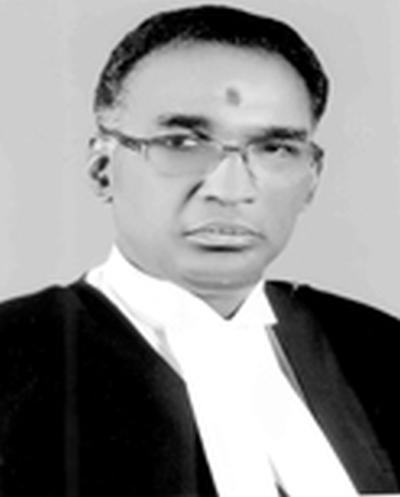
Justice Jasti Chelameswar, the fifth-most senior judge of the Supreme Court, and a member of the SC’s collegium, made the news today with the New Indian Express publishing his refusal to participate in a Supreme Court collegium meeting, as a protest against the collegium’s failure to comply with the principle of transparency of its proceedings.
We have brought together the recent developments, which might result in Justice Chelameswar’s increasing isolation within the collegium, if not in the Supreme Court.
Is this a revolt or a protest?
Indeed it seems to be a bit of a revolt, as Justice Chelameswar is now unlikely to participate in the future collegium sessions unless his demands are met by the other members.
What’s this collegium thing again?
Well, it is supposed to meet once in a while to send recommendations for appointment of judges to the Supreme Court and the high courts, and also recommend transfers of judges from one high court to another.
And who invented the collegium?
The collegium is a product of the Second Judges case in 1993. When it began operating, it had just the three most senior judges of the Supreme Court, including the CJI
In the third Judges case in 1998, the SC expanded it a bit, by nominating the five senior-most judges to it.
Its current members are the Chief Justice of India (CJI) TS Thakur, Justice Anil R Dave, Justice JS Khehar, Justice Deepak Misra and Justice Chelameswar.
Cool. So why did Chelameswar refuse to take part in the collegium meeting yesterday?
Well, it began with his famous (but not https://www.legallyindia.com/scoi-reports/scoi-scoop-njac-is-j-chelameswar-s-4th-major-dissent-as-sc-judge unusual) dissent in the National Judicial Appointments Commission (NJAC) judgment, which was heard by a five-judge constitution bench, comprising Chelameswar and justices Khehar, Madan B Lokur, Kurian Joseph, and Adarsh Kumar Goel, last year.
Justice Chelameswar dissented from the majority, and upheld the NJAC Act, and the accompanying Constitution Amendment.
But he joined the majority while (perhaps controversially and anti-climactically) deciding that the collegium should be reformed in a future case.
This laid down certain parameters such as transparency, secretariat, eligibility criteria, and a mechanism for redressal of complaints for the Government to follow while finalising the new Memorandum of Appointment (MoA).
But the new MoA is not yet finished, right? What is the issue here?
Correct: there is a messy tug-of-war going on between the Government and the collegium over the new MoA
The Government insisted that it should have the last say in judicial appointments, if appointees recommended by the collegium are found unfit because of national security considerations.
The collegium rejected this proposal of the Government.
Second, the Government proposed that a committee of former judges, and eminent jurists must prepare a shortlist of candidates for the collegium to consider.
The collegium felt that it was probably a ruse by the Government to insert its own puppets into the selection process through the back door.
Therefore, the collegium opposed this too.
So does Chelameswar disagree with his collegium brother judges on these points?
It’s hard to know for sure.
What is clear, however, is that he is extremely unhappy with the hush-hush manner that the collegium continues to deliberate about the future appointees to the higher judiciary, and also about its ongoing dialogue with the Government.
So, he wrote a letter to the CJI, explaining his views?
Yes, he reportedly wrote a three-page letter, according to today’s report in the New Indian Express.
But why has Justice Chelameswar not released his three-page letter to the media yet, despite batting for transparency?
That is a bit paradoxical, isn’t it?
Then again, most judges (except for Markandey Katju, obviously) probably deeply believe in their gut that a judicial omerta is a rather good and gentlemanly thing.
So what happens now? Can the collegium even meet without a member?
Yes, it can, if a member recuses himself on some ground.
And a member can always dissent, and his dissent must be recorded in writing, and conveyed to the Government.
But the current situation when a member keeps away in protest is unprecedented.
So, the collegium is basically dead in the water without a member participating in its deliberations?
Yes, pretty much.
And a divided front amongst its own ranks is probably the last thing the apex court needs right now.
After all, for the past few months CJI Thakur himself has been exhorting the government hard to finally let the collegium get on and at least appoint some judges (and possibly even shedding some tears over it), as the crisis of judicial vacancies has grown to shocking proportions.
The sooner this is resolved by the chief justice and his colleagues, the better.
But Chelameswar is just demanding transparency in collegium proceedings. Why can’t other judges agree to that?
There should be no difficulty at all to it, and there is not even a need to finalise the new MoP for this.
For example, the collegium on its own, could issue a press release summing up its deliberations on the MoP issue and its recommendations about future appointees.
It is, therefore just a tad inexplicable why the collegium is reluctant to do so, especially, when it has the backing of its constitution bench judgment on this.
So, might Chelameswar get the others to compromise, or will he become unpopular at lunch with his colleagues?
About that, we have no idea.
The judiciary works in mysterious ways…
Comments
The brother to brother nexus is usually very strong. Judgeship runs in families, as you would know. So if there is transparency it will only be a good thing.
http://timesofindia.indiatimes.com/city/mumbai/Womens-safety-panel-not-given-extension-Bombay-high-court-not-amused/articleshow/40289360.cms