Justice Kurian Joseph’s historical counterfactual: If only the bench that heard the First Judges case in 1981 had not ignored Samsher Singh, there would not have been Second Judges, Third Judges, and Fourth Judges cases later.
The future independence or otherwise of the judiciary will be decided today in the fourth judges case, ruling on the validity or otherwise of the National Judicial Appointments Commission (NJAC).
The Modi government’s law ministry wants the Supreme Court to disclose greater details about itself, including court-wise pendency of civil as well as criminal cases, number of adjournments in each particular case and sanctioned and working strength of judges to increase transparency in the legal sy...
The justices will have to choose one of many bad optionsDebate around the National Judicial Appointments Commission (NJAC) has often been emotive rather than dispassionate, with the discourse ranging from senior lawyer Ram Jethmalani calling it an “evil absurdity” to attorney general Mukul Rohatgi pointing to judges who habitually turned up late in court as a reason to ditch the existing collegium system to select judges.
The PTI reported the law ministry releasing data that: according to the latest data compiled by the Law Ministry, as on [1 August], the high courts were facing a shortage of 384 judges as against the approved strength of 1017. Thus, the 24 high courts are functioning with a working strength of 633 j...
The Supreme Court on Thursday asked for the central government’s response to contentions that certain provisions of NJAC Act of 2014 dealing with selection of high court judges violated the federal structure and were substantive than procedural in nature. Asking Solicitor General Ranjit Kumar to add...
The Supreme Court today expressed its misgiving on opening the entire process of appointments to the higher judiciary to public scrutiny, saying that words like “transparency” and “criteria” sound good but have their pitfalls. Noting that transparency could be there to a “certain degree”, the court ...
The Supreme Court was on Tuesday told that the entire country was suffering on account of bad politics by bad politicians, who should thus have no voice in the higher judicial appointments. “We are suffering from bad politics and we are suffering from bad politicians. Whole political class is under ...
“Justice [Gyan Sudha] Misra, who although sat a little after the scheduled time, never compromised by rising just after half-an-hour. She was the last one to leave the court premises, be it the Supreme Court or High Court. There were absolutely no cause-lists that were not exhausted by her and no ju...
The collegium, the Bar Council of India (BCI) and the Common Law Admission Test (CLAT) symbolise the cliques that are not accountable to anyone other than themselves that run the Indian legal universe, argues NLSIU Bangalore visiting professor Shamnad Basheer on recent news start-up website The Wire...
Disputing the government position, an association of apex court lawyers on Friday told the Supreme Court that parliament could not have passed the National Judicial Appointment Commission Act in August 2014 as it had no foundation in the constitution to stand on. “The passage of NJAC Act, 2014, was ...
The Supreme Court Advocate on Record Association (SCAORA) on Wednesday questioned in the apex court the central government’s claim that junking the collegium system for National Judicial Appointment Commission was “the will of the nation”. Assailing the government’s contention that the “nation wants...
Taking a divergent position from the government, the Supreme Court Bar Association (SCBA) Tuesday told the Supreme Court that if it was to strike down the NJAC, then it would result in automatic resurrection of the collegium system followed earlier. “I disagree with the government that the invalidat...
The central government on Monday told the Supreme Court that any invalidation of the NJAC for the appointment of judges to the higher judiciary would not result in the automatic resurrection of the collegium system of appointment.
The government today told the Supreme Court that the tax payers had a right to know the quality of judges appointed to the higher judiciary, as it once again criticised the collegium system “of judges appointing judges - for promoting judges who reserved judgments in hundreds of cases after long hea...
The Supreme Court on Thursday said that the rejection of an aspirant for appointment as a judge on the grounds of doubtful credentials could be disastrous with the NJAC coming within the ambit of the defamation law. The court expressed its misgiving saying that it would be difficult to give an “hone...
Union Law Minister DV Sadananda Gowda said today that the independence of the judiciary was not undermined because it did not have primacy in the membership of the National Judicial Appointments Commission (NJAC). In an interview to India Today Television, the minister said the independence of the j...
The government today told the Supreme Court that the collegium recommended and reiterated the appointments of people as judges despite adverse Intelligence Bureau reports and “severe” comments by its own judges questioning their ability and integrity in some cases. Attorney General (AG) Mukul Rohatg...
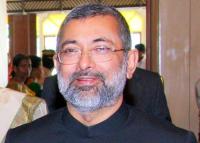 Justice Kurian Joseph’s historical counterfactual: If only the bench that heard the First Judges case in 1981 had not ignored Samsher Singh, there would not have been Second Judges, Third Judges, and Fourth Judges cases later.
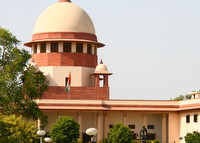 The future independence or otherwise of the judiciary will be decided today in the fourth judges case, ruling on the validity or otherwise of the National Judicial Appointments Commission (NJAC).
 The central government on Monday told the Supreme Court that any invalidation of the NJAC for the appointment of judges to the higher judiciary would not result in the automatic resurrection of the collegium system of appointment.